Proposal to Reduce Taxes for the Paper Industry
The Vietnam Paper Corporation has recently proposed that the government reduce the value-added tax (VAT) to 5% for all domestically produced paper in order to fully exploit its potential, increase output, and diversify products to replace imported goods.
In addition, the corporation has also suggested granting special preferential treatment for loans related to the cultivation of raw paper materials and for the construction of paper factories in mountainous areas. It also proposes approving the plan to develop raw material zones for the Kon Tum Pulp Mill and authorizing the import of waste paper to operate the pulp production line at the Tan Mai Paper Factory.
The biggest limitation faced by paper factories at present is outdated technology, which results in low productivity, poor quality, limited product variety, and high costs. The paper industry is experiencing a severe imbalance between paper production and pulp production. Every year, the country must import between 75,000 and 80,000 tons of pulp, and domestic paper production is often affected and subject to fluctuations in the foreign market prices. Meanwhile, the abundant domestic raw material sources for pulp production have not been fully exploited.
Giấy dó từ lâu đã gắn liền với lịch sử văn hóa, nghệ thuật và thủ công truyền thống của người Việt. Giữa thời đại số hóa và sự lên ngôi của các loại giấy công nghiệp hiện đại, loại giấy làm từ vỏ cây thủ công này vẫn giữ một vị trí đặc biệt.
Bài viết này sẽ giúp bạn hiểu rõ bản chất giấy dó là gì, quy trình làm ra chúng cũng như giá trị thực tiễn và khả năng ứng dụng của giấy dó trong đời sống hiện đại.

Khi những xu hướng thiết kế hiện đại đang dần bị bão hòa bởi các chất liệu công nghiệp như fomat, mica hay nhựa tổng hợp, sự xuất hiện của triển lãm "Cóc Cốc Tùng Tùng" tại Đình Sơn Trà giống như một khoảng lặng đầy bất ngờ. Trái tim của không gian trưng bày năm nay — cụm tác phẩm "Cóc kiện trời" khổng lồ cùng hệ thống 21 chiếc lồng đèn thủ công — hoàn toàn được dựng lên từ những vật liệu cơ bản nhất: tre, trúc và giấy dó.
Dưới lăng kính của những người làm nghề và nghiên cứu vật liệu, đây không đơn thuần là một sản phẩm trang trí mùa lễ hội, mà là một bài toán kỹ thuật thực thụ về sức chịu lực và cấu trúc tạo hình.
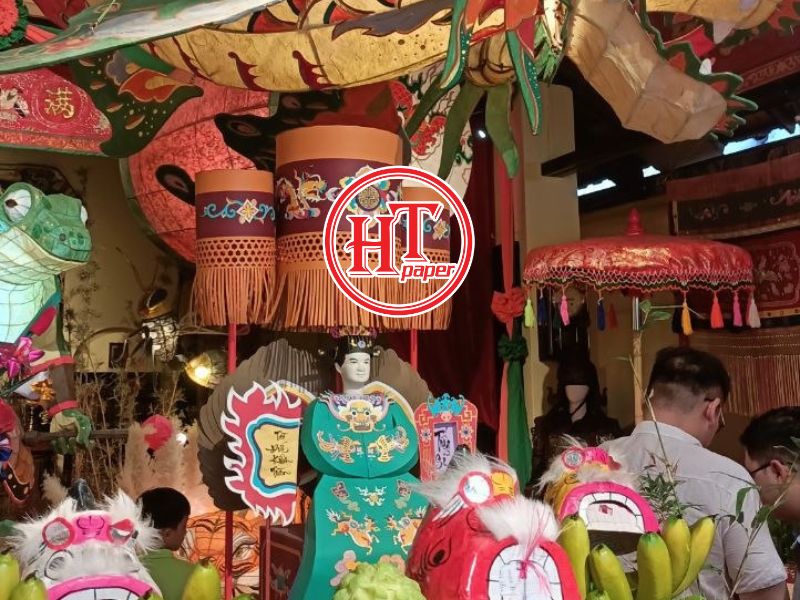
Giữa nhịp sống hối hả và có phần ngột ngạt của Sài Gòn, có những chốn dừng chân dường như tách biệt hoàn toàn với bên ngoài. Bước qua cánh cổng của ngôi đình cổ hơn 160 năm tuổi – Đình Sơn Trà trên đường Nguyễn Phi Khanh (quận 1) – cái nóng và tiếng xe cộ ngơ ngác lùi lại phía sau. Đón lấy chân mình là khoảng sân rợp bóng mát, nơi sự kiện triển lãm nghệ thuật Trung thu mang cái tên ngộ nghĩnh "Cóc Cốc Tùng Tùng" đang diễn ra.