The Paper Industry is Facing Significant Challenges
In the context of global economic integration, many issues require attention from various industries, companies, and manufacturers to choose the right business goals and strategies. Currently, the paper industry is one of the sectors that the government and state pay great attention to. However, the paper industry is still facing many significant challenges.
In the fierce competition, the domestic paper industry is at risk of losing right on home soil as Vietnam integrates into globalization. Paper from regional countries such as Thailand, Indonesia, Malaysia, and other global markets will flood into Vietnam, threatening the survival of the domestic paper industry.
Recycled paper is increasingly becoming a primary raw material for paper production. However, an existing paradox for many years is that the entire industry has to use 70-80% waste material for paper production, 50% of which is imported. The main source of domestic waste collection comes from individual scrap collectors, cleaning companies, scavengers, and intermediary collection stations.
Currently, there are no companies dedicated to paper recycling, so collection and recycling activities are largely spontaneous. Furthermore, the government has yet to create policies encouraging collection or establish a legal framework to regulate this activity, meaning that the paper recycling rate in Vietnam is still very low—around 25%—compared to 38% in China and 65% in Thailand.
Additionally, there is a difficult requirement: scrap collectors need to provide invoices in order for companies to deduct VAT on recycled paper. Despite multiple requests, this issue has not yet been resolved.
Ironically, Vietnam has surpassed Australia to become a major exporter of wood chips to Japan and China, but the value gained is very low. In Vietnam, the capacity to produce pulp can only meet half of the paper production demand. As a result, the paper industry is always dependent on high-cost imported pulp to produce paper. With such business practices, when will Vietnam's paper industry be able to compete on par with other countries in the region?
Using waste paper as a primary material for paper production can greatly reduce production costs, which helps lower product prices. The cost of pulp from waste paper is always lower than that from virgin materials because the costs of transportation, procurement, and processing are lower. On average, producing 1 ton of paper from recycled paper saves 17 trees and 1,500 liters of oil compared to producing paper from virgin materials. Moreover, the investment cost for a recycling production line is lower than for a pulp production line from virgin materials.
Additionally, producing paper from recycled paper contributes to environmental protection. On average, producing paper from recycled pulp reduces emissions by 74% and wastewater by 35% compared to producing paper from virgin pulp (According to the December 2008 Industrial Magazine). Therefore, the benefits of using recycled paper as a raw material for paper production are immense compared to producing paper from virgin trees. Hence, in the current phase, using recycled paper is crucial for the survival of paper companies.
However, according to the Vietnam Pulp and Paper Association, used paper is a vital raw material for the domestic paper industry, but this issue has not been facilitated by the authorities to help companies expand production. Instead, it remains "strict" with this raw material, especially when the Vietnamese paper industry is facing difficulties sourcing raw materials. The General Department of Environment's letter states: "Imported waste materials for production, especially imported paper waste, are special goods that pose a high risk of environmental pollution...".
Therefore, the General Department of Customs applies the regulations in the letter "6037/TCHQ-GSQL dated July 1, 2015," requiring 100% inspection of all imported waste paper shipments. The inspection is conducted at the border customs office and cannot be transferred to the production facility for examination. This has caused significant obstacles for companies during the import process. If companies do not want to undergo inspections, they must "pay a hefty fee" for each container of used paper.
At the same time, paper manufacturers must also deposit 20% of the total value of the imported waste paper shipments. For example, companies importing 1,000 tons per month must deposit up to 800 million VND/month, while those importing 2,500 tons per month must deposit up to 2 billion VND. This regulation poses a significant challenge for paper companies.
Currently, many companies have run out of imported raw materials and face the risk of halting production, leaving hundreds of workers without jobs. This greatly affects families and society.
Timely Solutions Are Needed
The paper industry is facing great difficulties. To survive and develop, the paper industry must adopt comprehensive measures to seize opportunities, overcome challenges, and strengthen its position.
Paper is a special commodity with high social significance, and the paper production industry has unique characteristics in terms of technology, equipment, and production lines. Therefore, in the future, it is essential to review and adjust the implementation of paper industry planning to avoid unscientific investments that focus on short-term benefits, as is the case currently.
Domestic companies that wish to compete must quickly invest in production lines, innovate technology, reduce costs, improve product quality, and build stable raw material areas through contracts with forest growers.
Furthermore, to resolve difficulties in the paper industry, the government should create preferential policies regarding access to capital for investing in modern equipment and technology, market research, taxes, and provide credit loans to develop raw material areas to supply stable raw materials for factories.
In particular, the Vietnam Pulp and Paper Association has recommended that the government exempt VAT for companies producing paper from recycled paper, exempt taxes for the collection and trade of used paper, and build specific policies for paper collection, recycling, and usage. Reducing the deposit requirement to a minimum for waste paper shipments is also critical. Additionally, encouraging domestic garment companies and government agencies to use locally produced paper and considering paper-producing trees as industrial crops with appropriate support policies will help the industry thrive and compete in the globalized market.
Giấy dó từ lâu đã gắn liền với lịch sử văn hóa, nghệ thuật và thủ công truyền thống của người Việt. Giữa thời đại số hóa và sự lên ngôi của các loại giấy công nghiệp hiện đại, loại giấy làm từ vỏ cây thủ công này vẫn giữ một vị trí đặc biệt.
Bài viết này sẽ giúp bạn hiểu rõ bản chất giấy dó là gì, quy trình làm ra chúng cũng như giá trị thực tiễn và khả năng ứng dụng của giấy dó trong đời sống hiện đại.

Khi những xu hướng thiết kế hiện đại đang dần bị bão hòa bởi các chất liệu công nghiệp như fomat, mica hay nhựa tổng hợp, sự xuất hiện của triển lãm "Cóc Cốc Tùng Tùng" tại Đình Sơn Trà giống như một khoảng lặng đầy bất ngờ. Trái tim của không gian trưng bày năm nay — cụm tác phẩm "Cóc kiện trời" khổng lồ cùng hệ thống 21 chiếc lồng đèn thủ công — hoàn toàn được dựng lên từ những vật liệu cơ bản nhất: tre, trúc và giấy dó.
Dưới lăng kính của những người làm nghề và nghiên cứu vật liệu, đây không đơn thuần là một sản phẩm trang trí mùa lễ hội, mà là một bài toán kỹ thuật thực thụ về sức chịu lực và cấu trúc tạo hình.
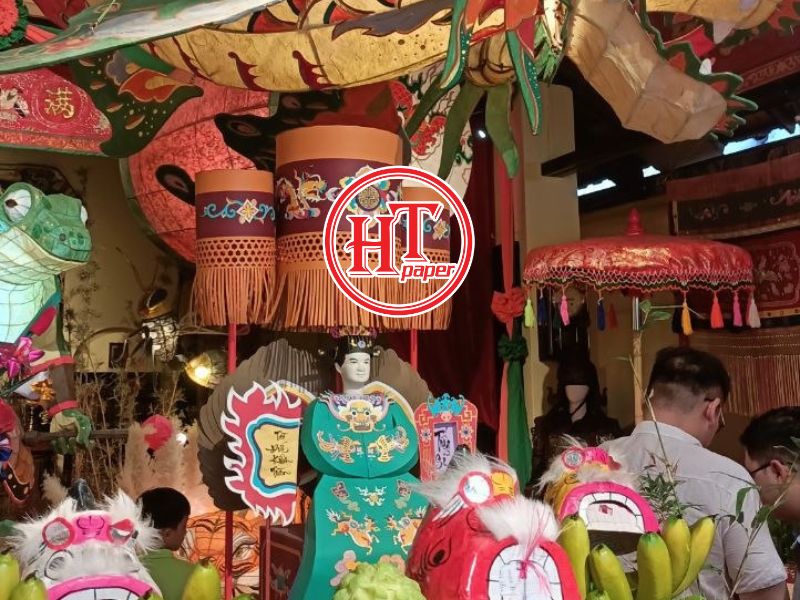
Giữa nhịp sống hối hả và có phần ngột ngạt của Sài Gòn, có những chốn dừng chân dường như tách biệt hoàn toàn với bên ngoài. Bước qua cánh cổng của ngôi đình cổ hơn 160 năm tuổi – Đình Sơn Trà trên đường Nguyễn Phi Khanh (quận 1) – cái nóng và tiếng xe cộ ngơ ngác lùi lại phía sau. Đón lấy chân mình là khoảng sân rợp bóng mát, nơi sự kiện triển lãm nghệ thuật Trung thu mang cái tên ngộ nghĩnh "Cóc Cốc Tùng Tùng" đang diễn ra.