Observations and Opinions of the Association on the Packaging Paper Market
On September 28, 2017, Mr. Han Vinh Quang, Chairman of the Vietnam Pulp and Paper Association, signed Official Letter No. 24/2017/VPPA to the Ministry of Industry and Trade, reporting the situation of the packaging paper market since the beginning of September. The report highlighted the current situation, causes, short-term and long-term impacts, and recommendations from the Association.
Currently, there is a widespread public concern about Chinese traders coming to Vietnam since early September 2017, purchasing all available packaging paper on the market at any price. They are even seeking long-term contracts and insisting on paying in advance to take the paper back to China.
The cause of this phenomenon is as follows:
Since May 2017, China has stopped issuing quotas for the import of recycled paper for production purposes.
China has closed down numerous paper production facilities to ensure these facilities upgrade their waste treatment systems to meet new standards before they can resume operation.
This has led to a shortage of raw materials for packaging paper production in China, resulting in a severe shortage of packaging paper in the Chinese market. As a consequence, packaging paper prices and the cost of paper packaging have been rising daily in China.
From now on, China will become an importer of recycled packaging paper due to:
From January 1, 2018, China will completely halt the import of unsorted waste paper.
The regulation on the impurities in imported waste paper used as raw material for production will be reduced to no more than 0.3% (currently 1.5%) – meaning waste paper must be completely clean.
The minimum scale for the factories allowed to import, process, and use recycled paper will be raised.
By the end of 2019, China will gradually stop importing solid waste that can be replaced by domestic products and resources.
China's new policies on the management of waste paper imports and pollution control have had significant impacts on the Vietnamese market:
Short-term impacts:
- The market suddenly faces a shortage of packaging paper.
- Paper factories are running at full capacity but still cannot meet the demand from domestic and international customers.
- Many factories have revived, and some factories now have the opportunity to accumulate capital for upgrading and expansion.
- Some factories are rushing to invest in order to take advantage of the opportunity.
- Domestic paper packaging manufacturers are facing a shortage of raw materials as a large amount of paper has been sold to foreign customers.
- Packaging paper prices have risen daily since the beginning of the month; the increase has reached more than 15%, and further increases are expected.
Long-term impacts:
- Many Vietnamese and FDI (Foreign Direct Investment) companies will invest in large-scale, modern technology-based packaging paper production in Vietnam.
- The process of phasing out outdated, small-scale, and polluting production lines will accelerate.
- The quality of packaging paper will improve rapidly.
- The collection of used paper in Vietnam will be stimulated, helping to utilize resources and protect the environment.
In light of the above situation, the Vietnam Pulp and Paper Association has promptly informed its members, paper manufacturers, and paper packaging companies about the fluctuations in the packaging paper market and made the following recommendations:
- Paper packaging manufacturers should strictly fulfill the contracts already signed with customers (paper packaging companies) regarding quantity and prices.
- Paper packaging manufacturers should discuss and negotiate with customers on how to deal with the new situation, based on market principles.
- Paper packaging manufacturers should consider reducing prices by 2-5% for new orders from traditional domestic customers compared to the prices offered to foreign customers for a certain period.
- Vietnamese paper manufacturers should continue to improve their waste treatment systems, especially wastewater, to comply with current standards.
- Investments in packaging paper production should aim for a capacity of at least 100,000 tons per year, using modern technology.
The Vietnam Pulp and Paper Association has reported the fluctuations in the packaging paper market and its opinions to the Ministry of Industry and Trade and awaits further guidance from the Ministry.
Giấy dó từ lâu đã gắn liền với lịch sử văn hóa, nghệ thuật và thủ công truyền thống của người Việt. Giữa thời đại số hóa và sự lên ngôi của các loại giấy công nghiệp hiện đại, loại giấy làm từ vỏ cây thủ công này vẫn giữ một vị trí đặc biệt.
Bài viết này sẽ giúp bạn hiểu rõ bản chất giấy dó là gì, quy trình làm ra chúng cũng như giá trị thực tiễn và khả năng ứng dụng của giấy dó trong đời sống hiện đại.

Khi những xu hướng thiết kế hiện đại đang dần bị bão hòa bởi các chất liệu công nghiệp như fomat, mica hay nhựa tổng hợp, sự xuất hiện của triển lãm "Cóc Cốc Tùng Tùng" tại Đình Sơn Trà giống như một khoảng lặng đầy bất ngờ. Trái tim của không gian trưng bày năm nay — cụm tác phẩm "Cóc kiện trời" khổng lồ cùng hệ thống 21 chiếc lồng đèn thủ công — hoàn toàn được dựng lên từ những vật liệu cơ bản nhất: tre, trúc và giấy dó.
Dưới lăng kính của những người làm nghề và nghiên cứu vật liệu, đây không đơn thuần là một sản phẩm trang trí mùa lễ hội, mà là một bài toán kỹ thuật thực thụ về sức chịu lực và cấu trúc tạo hình.
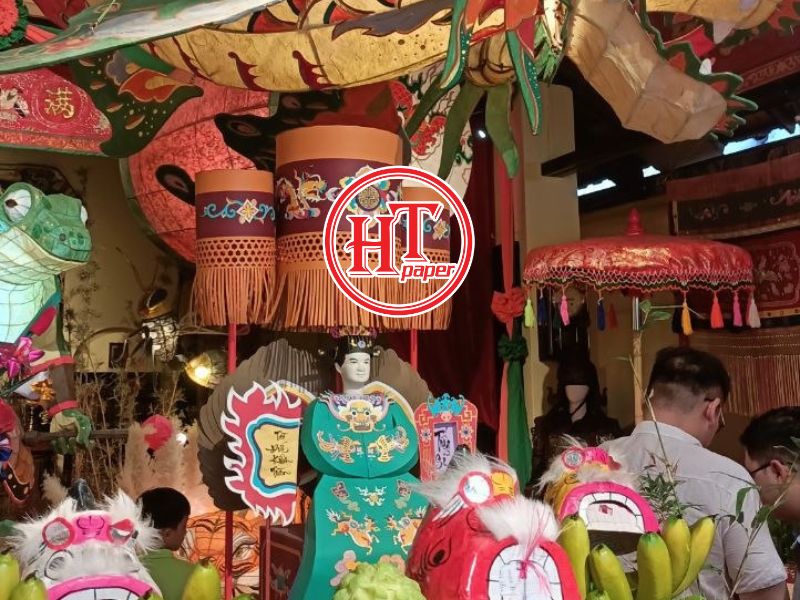
Giữa nhịp sống hối hả và có phần ngột ngạt của Sài Gòn, có những chốn dừng chân dường như tách biệt hoàn toàn với bên ngoài. Bước qua cánh cổng của ngôi đình cổ hơn 160 năm tuổi – Đình Sơn Trà trên đường Nguyễn Phi Khanh (quận 1) – cái nóng và tiếng xe cộ ngơ ngác lùi lại phía sau. Đón lấy chân mình là khoảng sân rợp bóng mát, nơi sự kiện triển lãm nghệ thuật Trung thu mang cái tên ngộ nghĩnh "Cóc Cốc Tùng Tùng" đang diễn ra.