
The Origin of Paper: Formation and Development Process
The origin of paper is a long journey from its invention to becoming an essential material in daily life. This article delves into the production process and the stages of development over time, marking paper as one of humanity's most successful inventions.
Part 1: The Origin of Paper
Paper originated in China around 105 A.D. The first recorded inventor of paper was Cai Lun, a court official during the Eastern Han Dynasty. He refined the papermaking process by using materials such as mulberry bark, scraps of cloth, and old fishing nets to create a new material—handmade paper. This innovation not only made recording and conveying written information easier but also served effectively for storing information.
.jpg)
Part 2: What is Paper?
Paper is a thin, flexible, and lightweight material created by humans from plant-based sources for various purposes. From storing information to applications in education and the arts, paper has become an essential part of daily life.
Part 3: The Paper Production Process
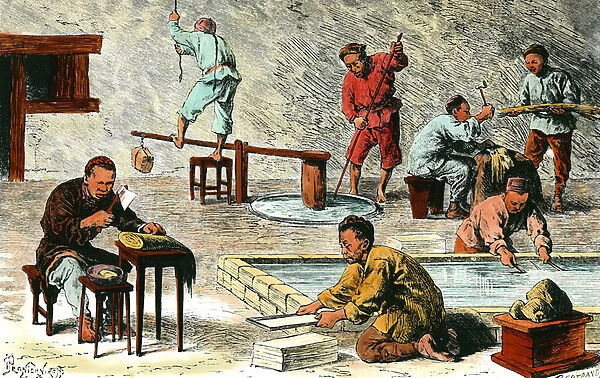
Cai Lun’s paper production process was simple but effective, consisting of the following basic steps:
- Pulping: Materials like mulberry bark, cloth scraps, and old fishing nets were ground into fine pulp.
- Mixing with Water: The fine pulp was then mixed with water to create a slurry.
- Pouring onto a Screen: This mixture was poured onto a screen, allowing water to drain, leaving a thin layer of material.
- Drying: The thin layer was then dried to form a complete sheet of paper.
Before Paper: What Did People Use?
Before the invention of paper, humans used various materials to record and convey information, including:
- Papyrus: In ancient Egypt, papyrus plants were used to create an early form of paper.
- Parchment: The Greeks and Romans used animal hides to create parchment, a durable material that was widely used.
Part 4: The Development of Paper Through Different Eras
From China to Asia
Papermaking techniques spread across Asia, from Japan to Korea, in the 7th century. Paper became a cultural staple, particularly in Chinese calligraphy, showcasing the origin of paper in China.
Spreading to the Middle East and Europe
By the 8th century, papermaking techniques were learned by the Arabs after capturing Chinese prisoners at the Battle of Talas. From there, the practice spread throughout the Middle East and into Europe. Europe’s first paper mills were established in Spain and Italy in the 12th century. Here, the papermaking technique continued to be refined, laying the groundwork for a flourishing paper industry in the West.
Advances in Paper Production Technology
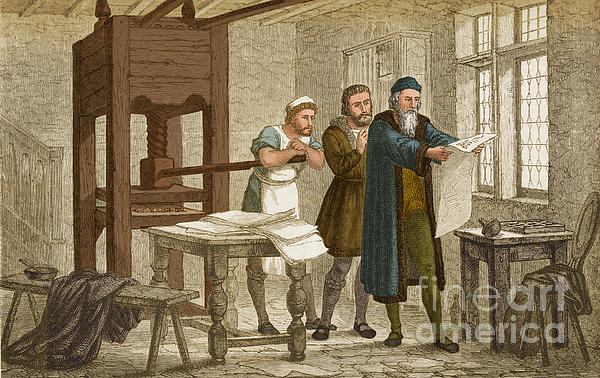
- Gutenberg’s Printing Press: In the 15th century, the invention of the Gutenberg printing press increased demand for paper, making knowledge and education more accessible.
- Industrial Revolution in the 19th century: This period shifted paper production from manual labor to mechanization, increasing output and lowering costs of labor and materials.
Part 5: Paper in the Modern World
Today, paper is made from various materials, including wood and recycled substances. Paper comes in numerous forms, from writing and newspaper paper to toilet paper and wrapping paper, fulfilling all kinds of needs in daily life. Yet, reflecting on the origin of paper, humanity is now confronting the environmental impacts of excessive resource extraction.
Environmental Concerns
Sustainable production and recycling initiatives are becoming more prominent to minimize environmental impact. We have created a history of paper’s origin, and now we share the responsibility to protect natural resources and promote environmental awareness.
Part 6: Conclusion
Paper has a long history, and its origin plays an important role in the advancement of humankind. From Cai Lun’s invention to modern production technology, paper is not just a medium for writing but also a symbol of knowledge and connection. Paper’s development reflects technological progress and exemplifies human creativity and adaptability in meeting the need for information and communication.
Source: Compiled, selected, and edited by P.Marketing - Hải Tín Paper
--------------------------------------------------------------------------------------------
Working Hours : Monday - Saturday : 08:00 am - 05:30 pm
Hotline:
CHINESE : 0938 808 998
ENGLISH : 0799.909.808
For more product : tại đây
Email: haitinco@gmail.com - kinhdoanh@haitinpaper.com
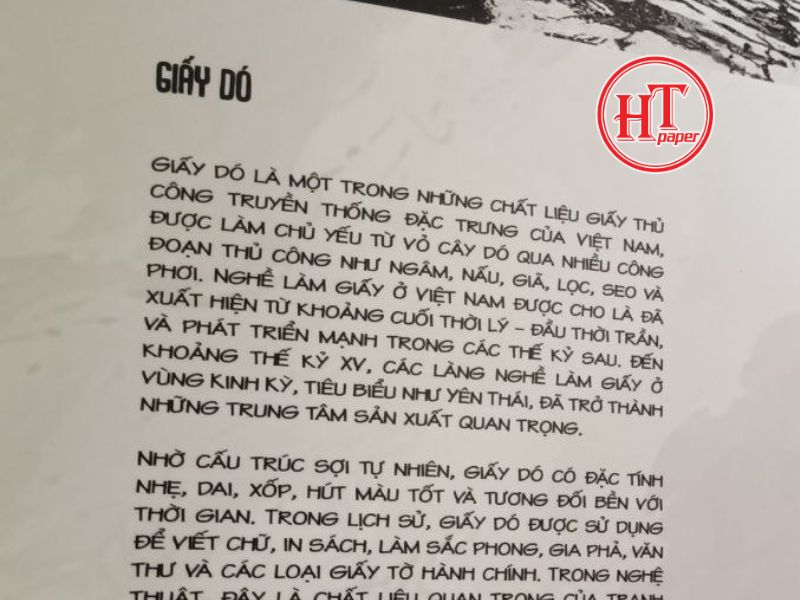
Giấy dó từ lâu đã gắn liền với lịch sử văn hóa, nghệ thuật và thủ công truyền thống của người Việt. Giữa thời đại số hóa và sự lên ngôi của các loại giấy công nghiệp hiện đại, loại giấy làm từ vỏ cây thủ công này vẫn giữ một vị trí đặc biệt.
Bài viết này sẽ giúp bạn hiểu rõ bản chất giấy dó là gì, quy trình làm ra chúng cũng như giá trị thực tiễn và khả năng ứng dụng của giấy dó trong đời sống hiện đại.

Khi những xu hướng thiết kế hiện đại đang dần bị bão hòa bởi các chất liệu công nghiệp như fomat, mica hay nhựa tổng hợp, sự xuất hiện của triển lãm "Cóc Cốc Tùng Tùng" tại Đình Sơn Trà giống như một khoảng lặng đầy bất ngờ. Trái tim của không gian trưng bày năm nay — cụm tác phẩm "Cóc kiện trời" khổng lồ cùng hệ thống 21 chiếc lồng đèn thủ công — hoàn toàn được dựng lên từ những vật liệu cơ bản nhất: tre, trúc và giấy dó.
Dưới lăng kính của những người làm nghề và nghiên cứu vật liệu, đây không đơn thuần là một sản phẩm trang trí mùa lễ hội, mà là một bài toán kỹ thuật thực thụ về sức chịu lực và cấu trúc tạo hình.
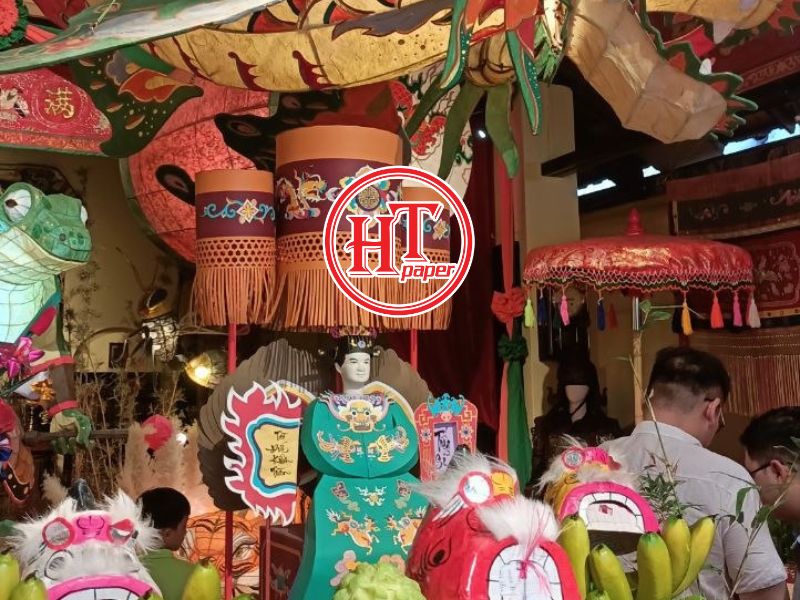
Giữa nhịp sống hối hả và có phần ngột ngạt của Sài Gòn, có những chốn dừng chân dường như tách biệt hoàn toàn với bên ngoài. Bước qua cánh cổng của ngôi đình cổ hơn 160 năm tuổi – Đình Sơn Trà trên đường Nguyễn Phi Khanh (quận 1) – cái nóng và tiếng xe cộ ngơ ngác lùi lại phía sau. Đón lấy chân mình là khoảng sân rợp bóng mát, nơi sự kiện triển lãm nghệ thuật Trung thu mang cái tên ngộ nghĩnh "Cóc Cốc Tùng Tùng" đang diễn ra.