Perforated Paper – An Efficient Solution for the Garment Industry
Perforated paper is an optimal solution in the garment industry, aiding in fabric stabilization, reducing cutting errors, and enhancing breathability to prevent mold. Hải Tín provides high-quality perforated paper, assisting garment factories in optimizing processes and reducing costs.
1. What is Perforated Paper?
Perforated paper is a specialized paper featuring pre-punched small holes on its surface, enhancing breathability and efficiency during cutting and sewing processes. This type of paper is widely used in the garment industry to support tasks such as fabric spreading, cutting, and storage.
With a smooth surface, good formability, and resistance to wrinkling, perforated paper facilitates a faster production process, saving time and optimizing costs for businesses.
.jpg)
2. Applications of Perforated Paper in the Garment Industry
2.1. Assisting in Accurate Fabric Spreading and Cutting
Stabilizes fabric during mass cutting, preventing slippage or misalignment.
Minimizes errors during cutting, ensuring high precision.
2.2. Enhancing Breathability and Preventing Mold
The punched holes allow air circulation, preventing moisture accumulation, crucial for long-term storage.
Prevents fabric from sticking to the paper surface, speeding up the workflow.
.jpg)
2.3. Reducing Production Costs
Minimizes material waste due to its excellent formability.
Accelerates production speed, helping businesses optimize labor and save costs.
3. Features of Hải Tín's Perforated Paper
Superior Quality: Smooth, thick paper with evenly punched holes for optimal performance.
Varied Sizes: Customizable orders to suit different fabrics and production scales.
Eco-Friendly: Biodegradable paper, safe for users, and environmentally friendly.
Competitive Pricing: Committed to providing reasonably priced products suitable for garment factories.
4. Why Choose Hải Tín's Perforated Paper?
Despite various perforated paper options in the market, Hải Tín's products are trusted by customers due to:
High-quality raw materials ensuring durability and performance.
Modern manufacturing technology providing excellent fabric adherence without wrinkling or tearing.
Prompt delivery and dedicated service, ensuring stable production for businesses.
Expert consultation to help customers select the most suitable paper for their production needs.
5. Guidelines for Effective Use of Perforated Paper
Select Appropriate Thickness: Choose suitable paper thickness based on fabric type and production scale to avoid waste.
Proper Storage: Keep paper in a dry place, avoiding direct contact with water or high humidity to maintain quality.
Combine with Fabric Cutting Machines: For large-scale production, perforated paper maximizes its utility when used with automated cutting systems.
6. Order Hải Tín's Perforated Paper – The Optimal Solution for the Garment Industry
Looking for high-quality perforated paper at reasonable prices? Hải Tín is your top choice! We are committed to delivering products that meet high technical standards, helping businesses optimize their production processes.
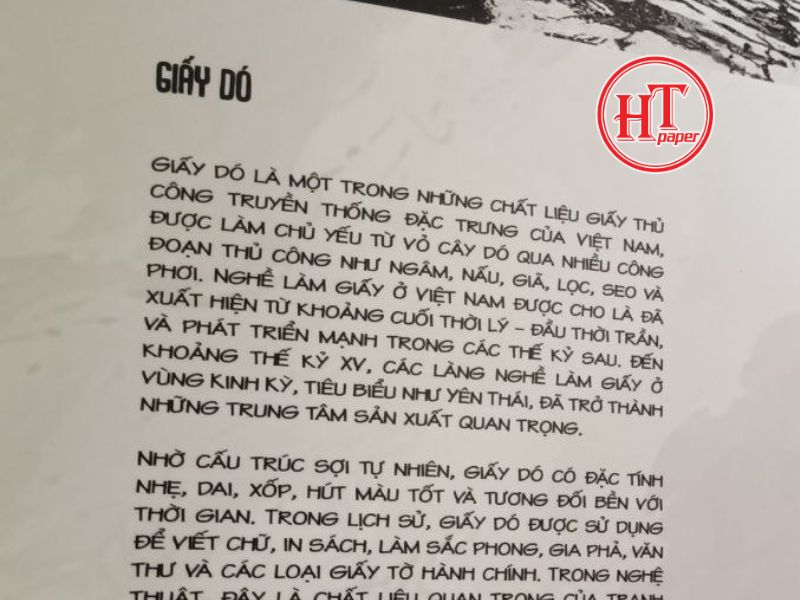
Giấy dó từ lâu đã gắn liền với lịch sử văn hóa, nghệ thuật và thủ công truyền thống của người Việt. Giữa thời đại số hóa và sự lên ngôi của các loại giấy công nghiệp hiện đại, loại giấy làm từ vỏ cây thủ công này vẫn giữ một vị trí đặc biệt.
Bài viết này sẽ giúp bạn hiểu rõ bản chất giấy dó là gì, quy trình làm ra chúng cũng như giá trị thực tiễn và khả năng ứng dụng của giấy dó trong đời sống hiện đại.

Khi những xu hướng thiết kế hiện đại đang dần bị bão hòa bởi các chất liệu công nghiệp như fomat, mica hay nhựa tổng hợp, sự xuất hiện của triển lãm "Cóc Cốc Tùng Tùng" tại Đình Sơn Trà giống như một khoảng lặng đầy bất ngờ. Trái tim của không gian trưng bày năm nay — cụm tác phẩm "Cóc kiện trời" khổng lồ cùng hệ thống 21 chiếc lồng đèn thủ công — hoàn toàn được dựng lên từ những vật liệu cơ bản nhất: tre, trúc và giấy dó.
Dưới lăng kính của những người làm nghề và nghiên cứu vật liệu, đây không đơn thuần là một sản phẩm trang trí mùa lễ hội, mà là một bài toán kỹ thuật thực thụ về sức chịu lực và cấu trúc tạo hình.
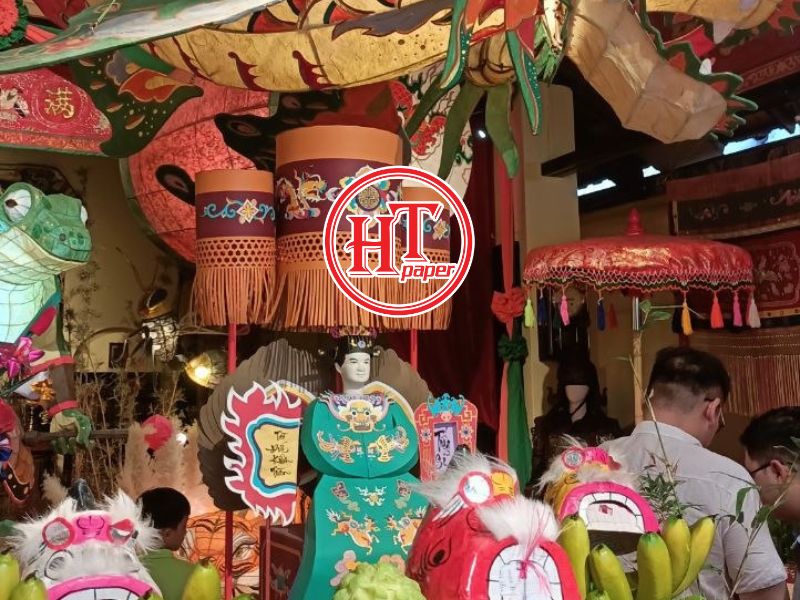
Giữa nhịp sống hối hả và có phần ngột ngạt của Sài Gòn, có những chốn dừng chân dường như tách biệt hoàn toàn với bên ngoài. Bước qua cánh cổng của ngôi đình cổ hơn 160 năm tuổi – Đình Sơn Trà trên đường Nguyễn Phi Khanh (quận 1) – cái nóng và tiếng xe cộ ngơ ngác lùi lại phía sau. Đón lấy chân mình là khoảng sân rợp bóng mát, nơi sự kiện triển lãm nghệ thuật Trung thu mang cái tên ngộ nghĩnh "Cóc Cốc Tùng Tùng" đang diễn ra.