
What Is a Ream of Paper? How Many Sheets Are in One Ream?
A ream of paper is a common unit used for packaging and distributing paper in the printing, office, and education industries. When you buy A4 copy paper for your printer, you typically see the product packaged in reams, with a fixed number of sheets per ream. This standard helps consumers easily estimate and use the paper.
A ream can apply to many different paper types, such as:
A4 paper
A3 paper
Offset printing paper
Fort paper
PhotoCopy paper
Kraft paper
…
How Many Sheets Are in One Ream?
According to the prevailing standard, one ream contains 500 sheets. This is the most common specification when purchasing office copy paper or printer paper. However, there are a few variations:
1 ream = 100 sheets: Often used for specialty art paper, heavyweight paper, or special-purpose sheets.
1 ream = 250 sheets: Some specialized printer paper lines may be packaged this way for easier distribution.
Nonetheless, unless otherwise noted, 1 ream = 500 sheets is the universally accepted default in the paper industry.
Why Is It Called a “Ream”?
The word “ream” is borrowed from English (“ream of paper”), a unit of measurement for the number of sheets that dates back to the 14th century. Today, “ream” remains a widely used unit throughout the global paper industry—from manufacturers to distributors to end consumers.
What to Note When Buying a Ream of Paper?
When selecting a ream of paper, consider the following:
Paper type: A4, A3, colored printing paper, kraft paper, etc.
Weight (GSM): Common weights are 70gsm and 80gsm.
Brand and whiteness: Higher-quality paper produces better prints and reduces the risk of paper jams.
Sheets per ream: Double-check if purchasing specialty paper.
Summary
A ream refers to a package of paper sold in a standardized quantity.
A standard ream = 500 sheets.
You may also encounter smaller reams of 100 or 250 sheets, depending on the product line.
If you’re looking to purchase quality reams of paper for office use, printing, or production, choose reputable brands and verify the packaging details carefully.
Giấy dó từ lâu đã gắn liền với lịch sử văn hóa, nghệ thuật và thủ công truyền thống của người Việt. Giữa thời đại số hóa và sự lên ngôi của các loại giấy công nghiệp hiện đại, loại giấy làm từ vỏ cây thủ công này vẫn giữ một vị trí đặc biệt.
Bài viết này sẽ giúp bạn hiểu rõ bản chất giấy dó là gì, quy trình làm ra chúng cũng như giá trị thực tiễn và khả năng ứng dụng của giấy dó trong đời sống hiện đại.

Khi những xu hướng thiết kế hiện đại đang dần bị bão hòa bởi các chất liệu công nghiệp như fomat, mica hay nhựa tổng hợp, sự xuất hiện của triển lãm "Cóc Cốc Tùng Tùng" tại Đình Sơn Trà giống như một khoảng lặng đầy bất ngờ. Trái tim của không gian trưng bày năm nay — cụm tác phẩm "Cóc kiện trời" khổng lồ cùng hệ thống 21 chiếc lồng đèn thủ công — hoàn toàn được dựng lên từ những vật liệu cơ bản nhất: tre, trúc và giấy dó.
Dưới lăng kính của những người làm nghề và nghiên cứu vật liệu, đây không đơn thuần là một sản phẩm trang trí mùa lễ hội, mà là một bài toán kỹ thuật thực thụ về sức chịu lực và cấu trúc tạo hình.
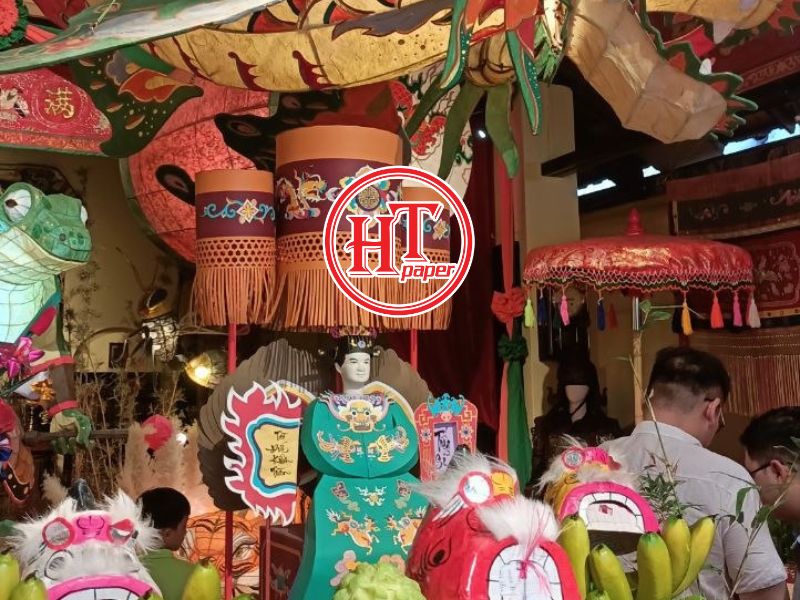
Giữa nhịp sống hối hả và có phần ngột ngạt của Sài Gòn, có những chốn dừng chân dường như tách biệt hoàn toàn với bên ngoài. Bước qua cánh cổng của ngôi đình cổ hơn 160 năm tuổi – Đình Sơn Trà trên đường Nguyễn Phi Khanh (quận 1) – cái nóng và tiếng xe cộ ngơ ngác lùi lại phía sau. Đón lấy chân mình là khoảng sân rợp bóng mát, nơi sự kiện triển lãm nghệ thuật Trung thu mang cái tên ngộ nghĩnh "Cóc Cốc Tùng Tùng" đang diễn ra.