
How a Sheet of Paper Is Made: The Modern Paper Manufacturing Process
In today's digital age, it is difficult to imagine a material that can completely replace paper. However, transforming raw wood into a clean white sheet of paper involves a highly sophisticated manufacturing process that requires precision at every stage.
1. Raw Material Preparation and Processing
Paper quality begins with the raw materials used in production. There are two primary sources of fiber:
Virgin Wood Fiber
Natural wood is the most common source of papermaking fiber. Softwoods such as pine provide long, strong fibers that improve paper strength, while hardwoods such as eucalyptus and oak contribute to a smoother paper surface.
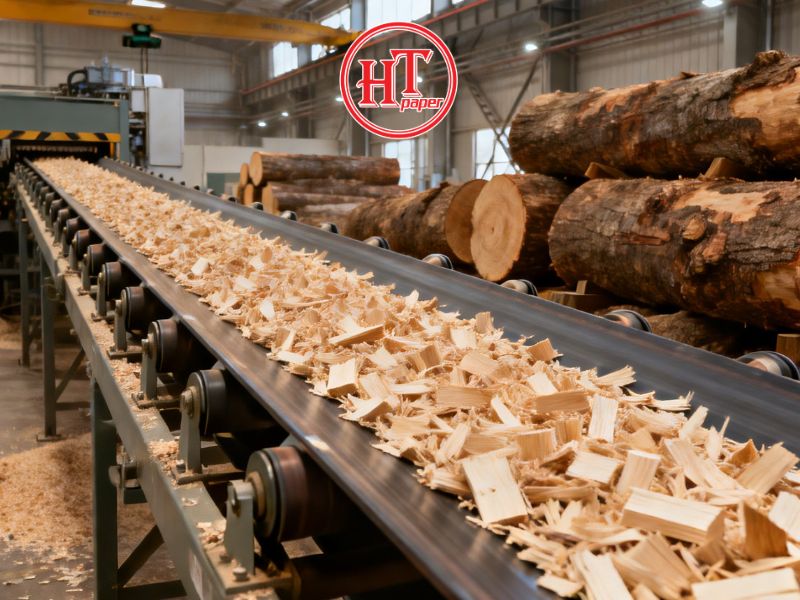
Before processing, logs are debarked, chipped into small pieces, and cleaned to remove impurities.
Recycled Paper
Recyclable paper products are collected and processed to remove printing inks, staples, adhesives, and other contaminants. The cleaned fibers are then reused as a sustainable source of raw material in paper production.
2. Pulping and Refining
This stage transforms wood chips into pure cellulose fibers.
Pulping
Wood chips are cooked under pressure with chemicals that dissolve lignin, the natural substance that binds wood fibers together. The Kraft process is currently the most widely used pulping method because it efficiently separates fibers while preserving cellulose strength.
Refining
After pulping, the fibers pass through refining equipment that fibrillates and softens the fiber surfaces. This process improves hydrogen bonding between fibers during sheet formation and directly influences the strength and durability of the finished paper.
3. Bleaching and Additive Blending
To achieve the desired brightness and whiteness, the pulp undergoes multiple bleaching stages using environmentally friendly oxidizing agents such as ozone or hydrogen peroxide.
Various additives are then incorporated depending on the intended application.
Fillers are added to improve opacity and surface smoothness.
Sizing agents and water-resistant additives help control ink absorption and printing performance.
4. Paper Formation
At this stage, the pulp mixture consists of more than 99% water.
The slurry is sprayed onto a rapidly moving polyester forming wire. Vacuum systems remove water efficiently, allowing cellulose fibers to interlock and form a continuous wet paper web.
This is the point at which the basic structure of the paper sheet is created.
5. Pressing, Drying, and Surface Finishing
The wet paper web is transformed into finished paper through a series of mechanical and thermal processes.
Pressing
The paper passes through press rolls and felts to remove additional water. This increases fiber density and improves paper strength.
Drying
The paper travels through multiple heated drying cylinders operating at temperatures above 100°C. During this stage, moisture evaporates and hydrogen bonds permanently stabilize the paper structure.
Calendering
The paper then passes through polished metal rollers that apply pressure to create a smooth, uniform surface. This process improves paper appearance, surface quality, and printability.
6. Finishing, Rewinding, and Quality Control
Once production is complete, the paper is wound into large rolls that can weigh several tons.
Electronic monitoring systems continuously measure critical quality parameters such as thickness, moisture content, tensile strength, and brightness.
The paper is then cut into required sizes, packaged, and stored in humidity-controlled warehouses to prevent deformation and maintain product quality.
Factors That Influence Paper Quality
Producing high-quality paper requires strict control of several important factors.
Fiber quality plays a significant role. Longer fibers generally produce stronger and more durable paper.
Moisture control during drying is essential to prevent brittleness, curling, or edge deformation.
Chemical additives determine important surface properties related to printing, packaging, and end-use performance.
Press pressure and machine speed directly affect paper smoothness, density, and basis weight (GSM).
Conclusion
Modern paper manufacturing combines advanced chemistry, mechanical engineering, and automation technology. Every sheet of paper delivered to consumers is the result of carefully controlled processes, from raw material preparation to final packaging. This level of precision ensures consistent quality, performance, and reliability across a wide range of paper applications.
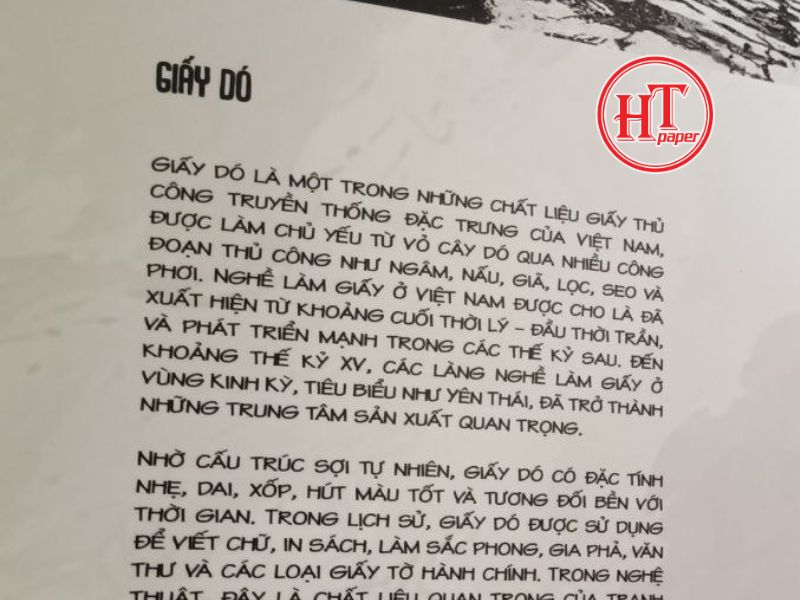
Giấy dó từ lâu đã gắn liền với lịch sử văn hóa, nghệ thuật và thủ công truyền thống của người Việt. Giữa thời đại số hóa và sự lên ngôi của các loại giấy công nghiệp hiện đại, loại giấy làm từ vỏ cây thủ công này vẫn giữ một vị trí đặc biệt.
Bài viết này sẽ giúp bạn hiểu rõ bản chất giấy dó là gì, quy trình làm ra chúng cũng như giá trị thực tiễn và khả năng ứng dụng của giấy dó trong đời sống hiện đại.

Khi những xu hướng thiết kế hiện đại đang dần bị bão hòa bởi các chất liệu công nghiệp như fomat, mica hay nhựa tổng hợp, sự xuất hiện của triển lãm "Cóc Cốc Tùng Tùng" tại Đình Sơn Trà giống như một khoảng lặng đầy bất ngờ. Trái tim của không gian trưng bày năm nay — cụm tác phẩm "Cóc kiện trời" khổng lồ cùng hệ thống 21 chiếc lồng đèn thủ công — hoàn toàn được dựng lên từ những vật liệu cơ bản nhất: tre, trúc và giấy dó.
Dưới lăng kính của những người làm nghề và nghiên cứu vật liệu, đây không đơn thuần là một sản phẩm trang trí mùa lễ hội, mà là một bài toán kỹ thuật thực thụ về sức chịu lực và cấu trúc tạo hình.
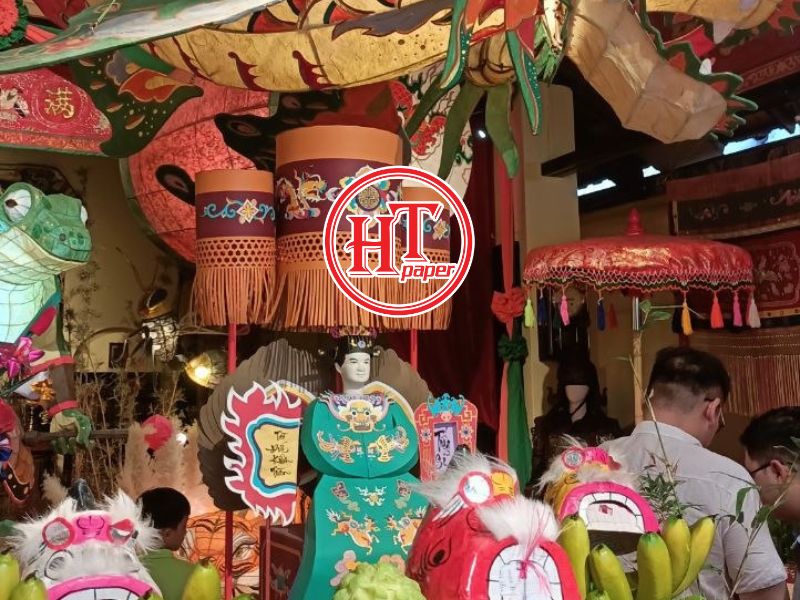
Giữa nhịp sống hối hả và có phần ngột ngạt của Sài Gòn, có những chốn dừng chân dường như tách biệt hoàn toàn với bên ngoài. Bước qua cánh cổng của ngôi đình cổ hơn 160 năm tuổi – Đình Sơn Trà trên đường Nguyễn Phi Khanh (quận 1) – cái nóng và tiếng xe cộ ngơ ngác lùi lại phía sau. Đón lấy chân mình là khoảng sân rợp bóng mát, nơi sự kiện triển lãm nghệ thuật Trung thu mang cái tên ngộ nghĩnh "Cóc Cốc Tùng Tùng" đang diễn ra.