What Is GSM?
In the printing, packaging, and garment paper industries, GSM is one of the most fundamental and important indicators used to evaluate paper quality. However, not everyone fully understands this specification and how it can help optimize production costs. So, what exactly is GSM, and why is it such a critical factor when selecting paper?
1. What Does GSM Mean?
GSM stands for Grams per Square Meter, which is the standard unit used to measure paper grammage or basis weight. It indicates how much one square meter of paper weighs.
Simple example:
If a paper is rated at 80 GSM, it means that one square meter of that paper weighs 80 grams.
General rule:
The higher the GSM value, the heavier the paper.
2. GSM vs. Paper Thickness: Understanding the Difference
One common misconception is that GSM and paper thickness are the same thing. In reality, two papers with the same GSM may have different thicknesses.
Paper thickness depends on fiber density and the manufacturing process:
Low-density (bulk) paper:
Paper fibers are less compressed, creating more air pockets. As a result, the paper appears thicker even though its GSM may be relatively low.
High-density paper:
Paper fibers are tightly compressed, producing a smoother and denser surface. The paper may feel thinner, but its GSM can actually be quite high.
Therefore, when selecting marker paper or kraft paper, it is important to consider both GSM and paper thickness to ensure compatibility with printing and cutting equipment.
GSM and paper thickness are two completely different concepts.
3. Common GSM Ranges Used Today
Different applications require different paper weights.
35–55 GSM
Very lightweight papers commonly used for newspapers, garment interleaving paper, and thermal receipt paper.
60–100 GSM
The most common range for office paper (A4) and marker paper. It provides a good balance between strength and printability.
120–250 GSM
Typically used for flyers, thin book covers, and perforated paper requiring greater mechanical strength.
300 GSM and above
Heavy paperboard used for premium packaging, backing boards, and carton production.
4. Why Is GSM Important in Manufacturing?
Understanding GSM provides three major benefits for manufacturers.
Optimizing Material Costs
Knowing the exact GSM allows companies to calculate the total paper length obtainable from a roll based on its weight. This helps control material waste and improve budgeting accuracy.
Ensuring Equipment Performance
Every marker printer and automatic cutting machine has recommended paper weight specifications. Using the correct GSM helps protect print heads, feeding systems, and minimizes paper jams or interruptions during production.
Maintaining Product Quality
In the garment industry, marker paper must have an appropriate GSM to achieve suitable opacity and visibility. This ensures pattern lines remain clear and readable without excessive transparency or image distortion.
5. How to Choose the Right GSM
For marker paper:
A GSM range of 50–70 GSM is generally recommended, offering a balance between durability and cost efficiency.
For kraft packaging paper:
A GSM range of 70–120 GSM provides good strength and structural stability.
For automatic cutting applications:
Higher GSM papers with better rigidity and surface strength are recommended to withstand cutting pressure.
Conclusion
Understanding GSM is essential for selecting the right paper for your application. Choosing the appropriate paper weight is not only a technical decision but also an effective way to improve productivity and reduce waste.
If you are looking for garment paper or packaging paper with consistent quality and accurate GSM specifications, contact Hai Tin Paper today for professional consultation and reliable supply solutions.
Giấy dó từ lâu đã gắn liền với lịch sử văn hóa, nghệ thuật và thủ công truyền thống của người Việt. Giữa thời đại số hóa và sự lên ngôi của các loại giấy công nghiệp hiện đại, loại giấy làm từ vỏ cây thủ công này vẫn giữ một vị trí đặc biệt.
Bài viết này sẽ giúp bạn hiểu rõ bản chất giấy dó là gì, quy trình làm ra chúng cũng như giá trị thực tiễn và khả năng ứng dụng của giấy dó trong đời sống hiện đại.

Khi những xu hướng thiết kế hiện đại đang dần bị bão hòa bởi các chất liệu công nghiệp như fomat, mica hay nhựa tổng hợp, sự xuất hiện của triển lãm "Cóc Cốc Tùng Tùng" tại Đình Sơn Trà giống như một khoảng lặng đầy bất ngờ. Trái tim của không gian trưng bày năm nay — cụm tác phẩm "Cóc kiện trời" khổng lồ cùng hệ thống 21 chiếc lồng đèn thủ công — hoàn toàn được dựng lên từ những vật liệu cơ bản nhất: tre, trúc và giấy dó.
Dưới lăng kính của những người làm nghề và nghiên cứu vật liệu, đây không đơn thuần là một sản phẩm trang trí mùa lễ hội, mà là một bài toán kỹ thuật thực thụ về sức chịu lực và cấu trúc tạo hình.
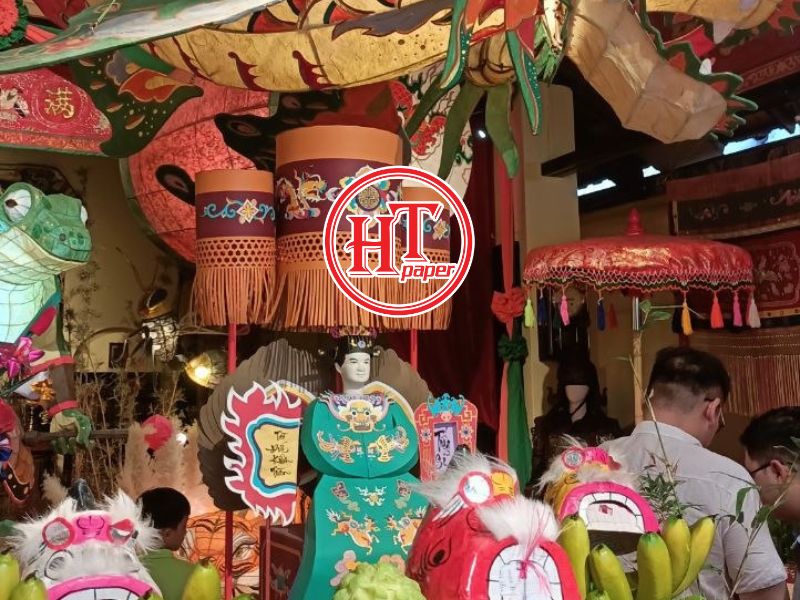
Giữa nhịp sống hối hả và có phần ngột ngạt của Sài Gòn, có những chốn dừng chân dường như tách biệt hoàn toàn với bên ngoài. Bước qua cánh cổng của ngôi đình cổ hơn 160 năm tuổi – Đình Sơn Trà trên đường Nguyễn Phi Khanh (quận 1) – cái nóng và tiếng xe cộ ngơ ngác lùi lại phía sau. Đón lấy chân mình là khoảng sân rợp bóng mát, nơi sự kiện triển lãm nghệ thuật Trung thu mang cái tên ngộ nghĩnh "Cóc Cốc Tùng Tùng" đang diễn ra.